I'm a paragraph. Click here to add your own text and edit me. It's easy.
I'm a paragraph. Click here to add your own text and edit me. It's easy.
I'm a paragraph. Click here to add your own text and edit me. It's easy.
I'm a paragraph. Click here to add your own text and edit me. It's easy.
I'm a paragraph. Click here to add your own text and edit me. It's easy.
I'm a paragraph. Click here to add your own text and edit me. It's easy.
I'm a paragraph. Click here to add your own text and edit me. It's easy.
I'm a paragraph. Click here to add your own text and edit me. It's easy.
I'm a paragraph. Click here to add your own text and edit me. It's easy.
I'm a paragraph. Click here to add your own text and edit me. It's easy.
I'm a paragraph. Click here to add your own text and edit me. It's easy.
Heading 4
I'm a paragraph. Click here to add your own text and edit me. It's easy.
I'm a paragraph. Click here to add your own text and edit me. It's easy.
I'm a paragraph. Click here to add your own text and edit me. It's easy.
I'm a paragraph. Click here to add your own text and edit me. It's easy.
Heading 4
Heading 4
Heading 4
Exercise 5.1 -

Project One
Project 1: Developing a Plan
Working with a framework:
This unit provides a flexible, self-directed framework that allows you to develop your own creative practice and research interests while working towards clearly defined outcomes. (OCA PAR Handbook 2026)
The framework consists of:
-
Ten projects and assignments that are completed according to your Project Plan. Each project is supported by tutorials, formative feedback, or group activities to guide your progress.
-
A Project Plan, developed in Project One, which outlines your practical work, identifies whether you will complete a Critical Review or Dissertation, and establishes a realistic study schedule across the ten projects.
-
Shared Stage Three PDF resources designed to support different aspects of your learning, including:
-
Reflect, Propose and Plan – developing your Project Plan.
-
Creative Strategies – supporting creative practice.
-
Critical Strategies – developing research and academic writing.
-
Locating Your Practice – connecting your practice, research, and overall project.
-
Case Studies that demonstrate how practitioners approach creative practice and research.
-
Additional discipline-specific resources and activities that provide further support relevant to your area of study.
Research Task: Critical Strategies
Critical strategies are used to interpret and evaluate a subject. Using various processes enables more in-depth analysis rather than purely descriptive analysis.
Common critical strategies include:
Formal Analysis - Examines visual elements such as:
-
Composition, colour, light, texture, perspective
Contextual Analysis - Considers:
-
Historical circumstances, social influences, political conditions or cultural awareness.
Semiotic Analysis - Investigates:
-
Signs and symbols, visual language
We should also consider
-
Viewer experience, perception and memorability.
Applying one or more of these critical strategies will provide a more comprehensive commentary on the chosen item.
Formal Analysis:
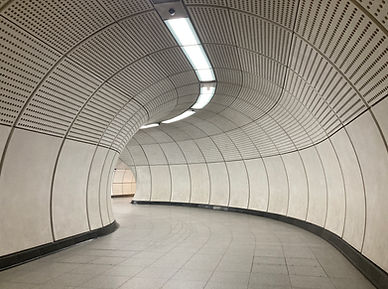
I'm a paragraph. Click here to add your own text and edit me. It's easy.
Contextual Analysis:


I'm a paragraph. Click here to add your own text and edit me. It's easy.
Semiotic Analysis:
.jpeg)
I'm a paragraph. Click here to add your own text and edit me. It's easy.
Other Considerations:
I'm a paragraph. Click here to add your own text and edit me. It's easy.


Exercise: Create a Glossary
Developing a personal glossary supports academic literacy and disciplinary understanding and may include terms such as:
Term Definition
Aesthetic The visual qualities and artistic characteristics of an image
Archive A collection of documents, photographs, or records preserved for study
Context The circumstances that influence the production and interpretation of a work
Discourse Systems of ideas and language that shape understanding
Ethics Moral considerations within research and practice
Gaze The act of looking and associated power relationships
Narrative The story or sequence of meaning conveyed through images
Representation The depiction or construction of people, places, or ideas
Semiotics The study of signs and meaning
Visual Culture The study of visual images and their societal impact
Maintaining and expanding this glossary throughout the course will strengthen academic writing and critical engagement.
Glossary - Version 1
Research Task: Viewing Case Studies

Case Study: Les Monaghan, Relative Poverty
Les Monaghan is a photographer and artist who works mainly in Doncaster, South Yorkshire. His practice addresses social class, community and representation, with a sustained concern for people whose lives are misrepresented or overlooked in dominant media narratives. He began as a press photographer, then progressively deconstructed documentary conventions through staging, writing, collaboration and re-contextualisation.

Context:
The supplied case study centres on Relative Poverty (2016–19), a collaborative project on UK destitution. Monaghan used images, text, talks and a low-cost pamphlet to make the subject visible in everyday public spaces. More recently, his 2025 practice-led doctoral thesis formalised this research: it argues for participant-centred documentary, contextual information and public discussion as ways photography can encourage compassion and social change.
Responses to questions
How would you describe your work and locate your practice?
Monaghan’s practice is socially engaged, research-led documentary photography located within South Yorkshire and its communities. It sits between photography, public pedagogy and social advocacy: rather than treating the gallery as the default destination, he makes work for libraries, schools, churches, community centres and union spaces. This local grounding matters because it brings work into contact with people who may be affected by, or able to respond to, the issues it raises.
What are the characteristics of your personal creative work?
His voice is compassionate, critical and collaborative. He challenges simplistic media depictions of poverty, migration and marginalisation, often using anonymity, text and carefully considered portraiture to protect participants from reductive or exploitative representation. The imagery is not designed to deliver an easy, single “truth”; it is contextualised so viewers are invited to think about structural causes and their own position.
What kind of projects are you interested in?
Monaghan develops long-term projects around inequality, austerity, migration, aspirations and the way communities are represented. Examples include Assimilation (2006–08), Aspirations Doncaster (2014), The Desire Project (2015–16), Relative Poverty (2016–19), and later text-and-portrait or collaborative works such as Heard in With / Heard in Lockdown and Invisible Vox Pops. From the Forest also shows a different but related enquiry: using RAF survival training to explore fear, control, ancestry and preparation for war.
Describe your creative strategies or working processes?
His process combines sustained research with collaboration and adaptation. In Relative Poverty, he worked with lived experience while keeping participants’ needs central; he paired photographs with explanatory text, used a direct question to frame the exhibition, and created conversations through talks linked to existing community events. He then adapted installation methods to each venue—above bookcases, on pillars and suspended from ceilings—so dissemination became part of the work rather than an afterthought. A pamphlet and accessible image descriptions extended the project beyond the exhibition encounter.
When is a piece of work successful?
For Monaghan, success is not only visual resolution or gallery recognition. A work succeeds when it treats participants ethically, reaches people beyond specialist art audiences, gives enough context to be understood, and stimulates meaningful discussion. His doctoral research is especially useful here: Relative Poverty achieved visibility and public information, while the harder question—whether viewers’ attitudes changed—remained open. This acknowledges that social impact should be pursued but not overstated.
What kind of learning or creative challenges do you respond to?
He responds to the ethical and practical challenges of documentary: how to show injustice without exploiting people; how to make difficult subjects visible without repeating clichés; and how to exhibit work where it can be encountered by a broad public. He also confronts the material realities of independent practice: unsuccessful funding applications, crowdfunding, travel, installation, promotion and unpaid labour. This demonstrates that access to a “free” venue does not remove the costs of making socially engaged work.
How do audiences or feedback shape your approach?
Audience engagement is built into the form of the work. Monaghan positions exhibitions in places already used by local people and organises discussions instead of assuming viewers will interpret photographs alone. The library network used for the Doncaster tour, for example, offered a substantial local public. Feedback is therefore not an after-event: its possibility shapes venue selection, format, language and accessibility from the outset. The use of image descriptions also signals an inclusive approach to audience.
What are your motivations and ambitions?
His motivation is to question why deprivation and exclusion persist in a wealthy country, and to make space for voices that are frequently unheard or inaccurately represented. His ambition is not simply to document social injustice but to make photography useful: to inform, generate compassion, create dialogue and support a wider demand for structural change. The completion of his PhD in 2025 shows a parallel ambition to articulate and test this approach as a contribution to documentary photography research.
Key learning from the case study
References:
Case Study: Yayoi Kasuma
Context:
Yayoi Kusama is a Japanese contemporary artist whose practice moves between painting, sculpture, installation, performance, film, fashion and writing. Rather than being located in one medium, her work is held together by a persistent visual and conceptual language: dots, nets, repetition, accumulation, reflection and infinity. Kusama’s Infinity Net paintings, immersive mirror rooms and participatory installations make the viewer physically and psychologically aware of space, scale and the instability of the self.

For a Fine Art Photography context, Kusama is particularly relevant because her installations are experienced through looking, framing and photographing. Her work asks viewers to question what is real, repeated or reflected. A photograph of a mirror room can document the experience, but it can also flatten it, turning a bodily encounter into an image for circulation. This tension between direct experience and photographic representation is a productive area for research.
Contrasts from other artists: Research
What are the characteristics of her personal creative voice?
Kusama’s creative voice is instantly recognisable. She uses repeated forms—especially polka dots and looping nets—to create images that feel both playful and unsettling. Bright colour, visual excess and repetition can produce a sense of joy, but also obsession, claustrophobia and loss of control.
Her work is autobiographical without being conventionally confessional.
Kusama has connected her early visual and auditory hallucinations to the development of her dots and net motifs. Instead of illustrating these experiences literally, she transforms them into a visual system that can be shared with an audience. This gives the work an emotional force: it is personal, but not private.
What kinds of projects is she interested in?
Kusama develops projects that expand beyond a single object. She is interested in environments, serial works and situations where a repeated motif can occupy an entire room, landscape or body. Her Infinity Mirror Rooms use mirrors and lights to create the illusion of endless space, while works such as The Obliteration Room invite visitors to add coloured dots to a domestic interior.
These projects challenge the traditional separation between artist, artwork and viewer. The audience is not only observing they become visible within the work, alter it, or create its public image through photography and social media.
Describe her creative strategies or working process
Repetition is Kusama’s central strategy. In the Infinity Net paintings, small individual marks accumulate into vast surfaces. The process is slow and labour-intensive, but the visual result can feel limitless. Repetition becomes both a formal device and a way of thinking: one unit is multiplied until it changes the experience of the whole.
She also works across scale. A dot can be a painted mark, a soft sculpture, a sticker, a pumpkin pattern, a light or a reflection. This ability to transfer a motif across materials allows her to build a coherent practice while continually making new work.
For my own practice, this suggests a useful question: what recurring visual element could I test across photographs, sequences, objects or installation? Kusama demonstrates that consistency does not require making the same work repeatedly; it can come from returning to a question or motif with different materials and scales.
When is a piece of work successful?
A Kusama work is successful when it does more than look decorative. The strongest works make the viewer feel the push and pull between attraction and unease, individuality and disappearance, containment and infinity. The visual language is accessible, but the experience is not simple.
In photography, success might similarly mean that an image holds attention beyond its immediate subject or visual appeal. It should create room for the viewer to question how it was made, what it excludes and how they are positioned in relation to it.
What kinds of learning or creative challenges does she respond to?
Kusama responds to the challenge of translating subjective experience into public form. Her practice shows a refusal to treat difficult internal experiences as a limitation; instead, she uses art to give them form, pattern and scale.
She also challenges the hierarchy of media. Painting, performance, installation and photography are not isolated categories in her work. This is useful for a Fine Art Photography practice because it encourages experimentation beyond the single photographic print: work might include sequence, projection, publication, archive, performance, audience participation or installation.
How do audiences or feedback shape her approach?
Audience participation is central to many of Kusama’s installations. In The Obliteration Room, the accumulation of visitor-applied stickers becomes the artwork. In mirror rooms, the viewer’s body and image are multiplied, making them part of the composition.
However, the popularity of Kusama’s installations raises an important critical question. The work is frequently consumed through photographs, particularly self-portraits made for social media. This does not necessarily weaken the work, but it changes its meaning. As a photography student, I would ask: does the photograph document an encounter, perform identity, advertise attendance, or become a new artwork in its own right?
What are her motivations and ambitions?
Kusama’s work is driven by a desire to make overwhelming inner experience visible and communicable. Her concept of “self-obliteration” describes the dissolving of the individual self into pattern, space and repetition. The work can therefore be read as both intensely personal and expansive: it moves from one body to a shared environment.
Her ambition is not modest. Kusama repeatedly turns a small mark into an all-encompassing world. This offers an important lesson for my own practice: a personal subject can become meaningful when it is developed with clarity, persistence and attention to how others will encounter it.
Reflection and possible practical response
Kusama’s practice encourages me to consider repetition as more than a compositional technique. I could use a repeated photographic subject, gesture, colour or framing device to explore themes such as memory, routine, anxiety, belonging or place. I would test how repetition changes an image sequence: does it make the familiar comforting, strange or oppressive?
A practical experiment could be to photograph one location repeatedly over several days, using the same framing while allowing small changes in light, weather and human presence to accumulate. I could then present the images as a grid, projection or small installation. The aim would not be to imitate Kusama’s dots, but to learn from her commitment to sustained repetition and the transformation of a simple visual unit into a larger experience.
Key learning from the case study
References:
Case Study: H. R. Giger

H. R. Giger (1940–2014) was a Swiss artist, designer and filmmaker best known for his distinctive “biomechanical” imagery: unsettling fusions of human anatomy, machines, architecture and fantasy. Although he is widely associated with the creature and visual-world design for Ridley Scott’s Alien (1979), his wider practice included airbrush painting, drawing, sculpture, furniture, interiors and film design (HR Giger Museum, n.d.; HRGiger.com, n.d.).
Giger’s practice sits between fine art and popular visual culture. It is useful in a Fine Art Photography context because his work is intensely concerned with the constructed image. His airbrushed paintings create an illusion of photographic smoothness and depth, even though they are painted. They invite questions about realism, manipulation, staging and the relationship between the body and technology.
Contrasts from other artists: Research
What are the characteristics of her personal creative voice?
Giger’s visual language is immediately recognisable: monochrome or muted palettes, polished airbrushed surfaces, tubular structures, skeletal forms and hybrid human-machine figures. The work often appears cold and mechanical, yet it is also bodily, sensual and vulnerable.
A central quality of his voice is ambiguity. It can be difficult to tell where a body ends and a machine begins; architecture can feel alive, while a figure may appear engineered or trapped. This produces a sense of unease. Giger’s work uses horror and beauty together, making the viewer look at images that are both seductive and disturbing.
What kinds of projects is he interested in?
Giger was interested in immersive visual worlds rather than isolated images. His paintings frequently imply an entire environment beyond the edge of the frame. This ambition extended into sculpture, interior design and cinema. The HR Giger Museum in Gruyères, Switzerland, presents work across painting, sculpture, furniture and film design, demonstrating how he developed one visual language across multiple forms (HRGiger.com, n.d.).
His work for Alien is particularly significant because it shows how an individual artistic language can enter a collaborative production. Giger’s painting Necronom IV helped shape the visual direction of the film’s alien creature and environment (The Guardian, 2014). This suggests that an artist’s practice can maintain a strong identity while responding to a brief, site or collaboration.
Describe her creative strategies or working process
Giger’s use of the airbrush was central to his process. It allowed him to produce gradual tonal shifts, smooth surfaces and an almost photographic illusion. Rather than treating the airbrush simply as a technical tool, he used it to construct an atmosphere: smoky, dreamlike and difficult to locate in time or place.
He also used combination as a strategy. Organic forms, industrial components, sexual imagery and architectural space are merged until they are inseparable. This creates a coherent world built from contrast. The repeated use of tubes, skull-like forms and anatomical references makes each work feel connected to a larger body of work.
For my own photographic practice, this raises the possibility of constructing images rather than only recording what already exists. I could experiment with lighting, collage, digital layering, close-up framing or staged objects to blur the boundary between familiar and unfamiliar.
When is a piece of work successful?
A successful Giger work creates a strong psychological response. It is not successful only because it is technically detailed or visually shocking. The most effective works make the viewer uncertain: drawn in by the surface, then unsettled by what the image suggests.
In photography, I might apply this idea by asking whether an image remains interesting after its subject is identified. Does the photograph create atmosphere, ambiguity or tension? Does it ask the viewer to look again? Technical control should support the idea, rather than become the subject of the work.
What kinds of learning or creative challenges does she respond to?
Giger responded to the challenge of making internal imagery visible. His work transforms anxiety, dreams, fear and fantasy into constructed visual spaces. He did not separate commercial and fine-art practice neatly; instead, he brought his personal visual language into different contexts, including film, album art, interiors and museum work.
This is useful because it suggests that creative development can come from testing one concern across different forms. For example, a photography project about technology and the body might develop into prints, a book, an installation, moving image or a staged environment.
How do audiences or feedback shape her approach?
Giger’s audience is shaped by both gallery culture and cinema. Many people first encounter his work through Alien, then discover the wider body of paintings and designs behind it. This shows how popular culture can become a route into more complex artistic work.
However, Giger’s imagery may provoke strong reactions because it includes disturbing, sexual and body-horror themes. This is an important consideration for exhibiting work. Challenging an audience can be valuable, but the artist should think carefully about context, accessibility and content warnings. Audience response does not have to make work less difficult; it can help an artist decide how the work is framed and encountered.
What are her motivations and ambitions?
Giger’s ambition was to create complete and convincing visual worlds. His work repeatedly returns to the relationship between the body, sexuality, death, technology and power. Rather than presenting technology as neutral, he makes it feel intimate and invasive.
His example encourages me to think about what systems or objects shape contemporary identity. In my own work, I could investigate the relationship between people and screens, surveillance, artificial intelligence, medical technology, gaming, machinery or online self-presentation. I would not imitate Giger’s imagery; instead, I would use his approach as a prompt to develop a personal response to the body and technology.
Reflection and possible practical response
A practical response could be a photographic series exploring the body within technological space. I could photograph hands, screens, cables, reflections and domestic devices using close framing and low-key lighting. Cropping would be important: it could make familiar objects appear strange, intimate or threatening.
I would use sequencing to build atmosphere rather than rely on one dramatic image. The final work could be presented as a small photobook, a grid of prints or a projection. This approach would draw from Giger’s use of repetition, transformation and atmosphere while remaining rooted in my own subject matter and photographic language.
Key learning from the case study
References
Exercise: Case study interview
Ask yourself questions from the Case Studies that you found interesting, or use the questions below. Use them as a reflective tool to think about how you discuss your own strategies and approaches, and how you frame your creative practice.
-
How do you describe and locate your practice?
-
What are the characteristics of your personal creative voice?
-
What kinds of projects are you interested in?
-
Describe your creative strategies or working process?
-
When is a piece of work successful?
-
What kinds of learning or creative challenges do you respond to?
-
How do audiences or feedback shape your approach?
-
What are your motivations and ambitions?
-
You may want to extend this exercise by interviewing another OCA student. Ask each other these or other questions, and use the responses as a starting point for a conversation. Document your responses.
Case Study placeholder - David Tate (Functional Furniture Artist)


David Tate Interview Placeholder
Case Study placeholder - OCA Artist Fine Art Photography PAR 3.1
Research Task: Beginning to Locate your Practice
Introduction:
-
This resource assists and deepens my awareness and practice.
-
The first section providing an overview of the main themes.
-
The second, practical ways to explore the themes through activities.
The aims of the resource are to:
-
introduce a spectrum of approaches to reflective thinking and practice spanning analytical, personal, critical, and creative processes
-
consider the scholarship underpinning good reflective practice to drive independent and professional practice.
this is a placeholder
Exercise: Reflect Propose Plan
PAR - Project Plan One


Group Activities:
Discussion Forum: Choosing a Platform for My Learning Log
Using the OCA Discuss Forum, I contacted fellow students Kevin Davis, Jonathon Kiernan, John Burns and Andrew Cunnington to clarify whether it was mandatory to use Padlet alongside Wix for my Learning Log. Their responses were helpful, and they all suggested that, although maintaining both platforms would involve additional work, using Padlet would be advisable because it is supported by OCA. Garry Clarkson, who is studying on a different course, also contacted me and expressed similar views.
Having considered their advice, I intend to continue using Wix as my primary Learning Log platform. As a visual arts student, I value the flexibility it offers in presenting my photographic work, research and reflections in a visually engaging format. I have also been using Wix since the 'Expressing Your Vision' unit, and I would like to maintain continuity in how I document and present the development of my practice.
However, I recognise the benefits of using an OCA-supported platform. I therefore intend to submit my Learning Log entries to Padlet as well, creating a supplementary record of my work. This approach should provide a useful backup in case of technical difficulties or accessibility issues with Wix, while ensuring that my learning and progress remain available through an OCA-supported platform.
On reflection, the advice received through the Discuss Forum has helped me consider the practical implications of maintaining my Learning Log across two platforms. Although this will require additional time and organisation, I believe it offers a reasonable balance between retaining my preferred visual presentation through Wix and meeting the practical benefits of using Padlet.